
5 Scams That Target Older Adults You Need To Look Out For

By Jimmy McKay, PT, DPT
Director of Communications
Senior scams result in $3 billion of stolen money every year, according to a senate special committee.
And older adults are twice as likely to be the victim of financial deceit.
As clinicians, our goal is to provide clinically excellent care to older adults that improve their overall health and well-being. This includes educating our patients and their caregivers about these illicit practices is another way we can help improve their human experience.
General Scam Tips For Older Adults
Keep Your Private Information Just That — Private
Scammers are looking to steal from you. And when someone says, “I’ve been robbed,” our first thoughts are typically that they’ve had money or property unjustly taken from them. While this can be true, today’s scammers are also on the lookout for other valuable details, like personal information, which they can use in a variety of ways.
So before you send your personal information to someone think: Do you know this person? Do they need to have this information? Does this transaction seem legitimate?
Keep a Record
Transactions online are getting easier and easier with apps like PayPal, Venmo, and Zelle. While using verified forms of sending money are preferred over cash transactions, even these apps warn against sending funds to people you don’t know.
Once you click “Transfer” and send your hard-earned money through the internet, it can be difficult and time-consuming to get back even if you can prove fraud.
Don’t Feel Pressured
Scammers often use a sense of urgency to get unsuspecting victims to rush through a transaction. This limits the chances that the victim will back out, run the idea by a friend, or potentially figure out that the offer isn’t what it seems. Look for a deadline that calls for immediate action. That’s a red flag.
5 Common Scams That Target Older Adults
Here are five common scams according to the Federal Trade Commission:
They Pretend to be a Familiar Organization
Scammers will often try and pose as organizations or people that you recognize, such as a local police department or a federal agency. They may even attempt to tug on your heartstrings and post as a charity organization or a local business. These are an attempt to give themselves the authority to gain your attention and ultimately deceive you. But if you look closely at the email addresses, you can often spot that they are not the official websites or email handles from these organizations.
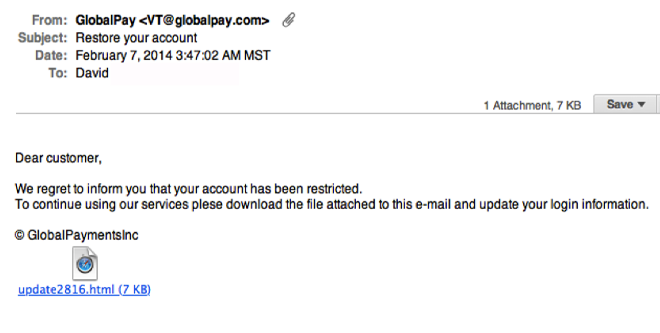
A tip to spot a fake: Government agencies use .gov email domains that non-government agencies can’t use. Verified non-profit organizations use email domains that can be verified by visiting their official websites to do a quick double-check. Often you can find contact information on a website that you can use to verify the validity of a message by comparing the email address listed on the site to what you’ve received via email.
How to avoid this scam? Verifying the identity of the person sending the message is the best way to make sure you’re not getting ripped off. Local police departments or federal agencies have public-facing phone numbers and email addresses listed online for when site visitors need to request information. Use one of these verified access points to double-check your situation before you send any money or personal information.
They play to your emotions
Positive and negative emotions are used often by scammers. They will use both of these to attempt to draw victims into a scam. This method is used by highlighting a problem or a prize according to the FTC. Typical situations scammers rely on is using fear. They tell the victim that they owe money to a government agency. On the other end of the emotional spectrum, a typical scam using a positive emotion is sending an alert to a potential victim that they have won a contest.
A short deadline for the victims to pay a fine to avoid penalties or to claim a prize is also used to increase the pressure along. In the fear scenario, this is often accompanied by a threat of legal action to increase the stress of the situation, saying the victim needs to act as soon as possible to avoid even more problems. Scammers rely on victims wanting the problem to go away as soon as possible to fall into their trap.
How to avoid this scam? A phone call to a trusted number listed on an official website or email to a verified address from a legitimate site from the organization is the safest way to proceed. If the situation is legitimate, it should be easy to verify. If the organization has no record of your situation, you can bet it’s a scam.
Grandparent Scam
“Your grandson/granddaughter is in trouble with the law, and you need to wire money right now to help them out.” That’s a common line that comes across a phone line from a scammer to a potentially unsuspecting older adult. Falsely identifying as law enforcement and a vague reference to a family member are tactics used frequently to grab the attention of older adults. Scammers will typically follow with a specific demand to send money to rectify the situation.
How to avoid this scam? The Federal Trade Commission has specific advice for this kind of scam and suggests the following:
- Avoid acting immediately.
- Stop and verify the identity of the caller as well as the family member in question by calling them directly from a verified number.
The FTC warns that sending funds to a scammer is almost always impossible to reverse. As soon as scammers have your money, it’s gone.
Tech Support Scam
With more and more of our lives tied to computer devices, tech support can be a lifesaver. But this comes with a warning from the Department of Justice: Scammers can pose as tech support through online ads, emails, or phone calls. The tech support scammers will attempt to convince unsuspecting victims to give them remote access to their computers through a phone call or by clicking a fake security warning. Once scammers have access to your device they can steal personal and financial information.
How to avoid this scam? The Federal Trade Commission reminds tech users that legitimate security warnings on a computer will never ask for you to call a phone number. If you do need support for your device, make sure you use contact methods that are readily available on familiar sites, like the manufacturer of your devices.
Medication Scam
Scammers try and prey upon common problems in the lives of their potential victims. For older adults, access to or paying for medications is an approach used often by scammers. The perpetrators lure potential victims into the scam with the promise of low-cost prescription drugs. This scam usually follows comes in the form of an email asking users to visit a site or to send money directly in exchange for medication. Phone call variations of this scam are also used to gain credit card and mailing address information.
Since older adults can have issues with cognition, they are particularly susceptible to this type of scam because the emails and calls can seem legitimate. Victims will be lured into buying their medications through a website with the promise of lower-cost. They wind up losing money or having their identity stolen. Commonly no medication is ever sent, but there have been a few reports of fake medication that have caused serious harm to the recipients. The medication that is received often is not what is on the label and could be potentially harmful to the recipient.
How to avoid this scam? Only obtain your medication from licensed health care professionals and pharmacies. If costs of medication are an issue, visit this list of approved assistance programs for older adults from the National Council on Aging.
With the rising use of digital devices by older adults, it’s becoming more and more common for scammers to target them virtually. Awareness and simple strategies to verify the identity and validity of someone you come across online are a strong first line of defense against online fraud. Use the ideas we shared here to keep the older adults in your life safe from scams.