
Efficacy of Physical Therapy in Stroke Rehabilitation
By Jordan Hoffman, PT, DPT
SLC Lead Clinician, Pennsylvania
Stroke occurs when blood flow to the brain is interrupted. Nearly 800,000 people a year have a stroke. Strokes can occur in any area of the brain and can affect different aspects of daily life. Depending on where the stroke occurs, there can be movement and mobility deficits that follow a stroke; research suggests that more than 40% of stroke survivors have movement deficits. The American Stroke Association reports that more than two-thirds of stroke survivors receive rehabilitative services after hospitalization.
Benefits from physical, occupational, and speech therapy are evident in research about stroke recovery. We will be discussing physical therapy techniques and treatments that can help stroke survivors return to their prior level of function.
Physical therapy evaluations incorporate a spoken portion to understand a patient's prior level of function and identify daily tasks that are most difficult for the patient after a stroke. This information is used to properly establish goals tailored to the patient's current presentation and prior level of function. Functional tasks will be performed, and the level of assistance needed through verbal instruction, visual demonstration, physical assistance, and tactile facilitation will be assessed. With that information, a physical therapist will develop a plan of care tailored to a patient's presentation and current deficits, incorporating various techniques and exercises to reach the patient's goals.
Please note that all prescribed exercises should be tailored to each specific patient; however, here we will discuss frequently utilized exercises during stroke rehabilitation.
Physical therapists utilize mobility training to help a patient get from point A to point B. For some people, that is walking with no assistive devices, such as a walker or cane, and for other people, that is making sure they can propel their wheelchair.
Transfer training is utilized to give patients assistance and verbal cuing to maximize safety as well as maximize independence with various types of transfers and bed mobility.
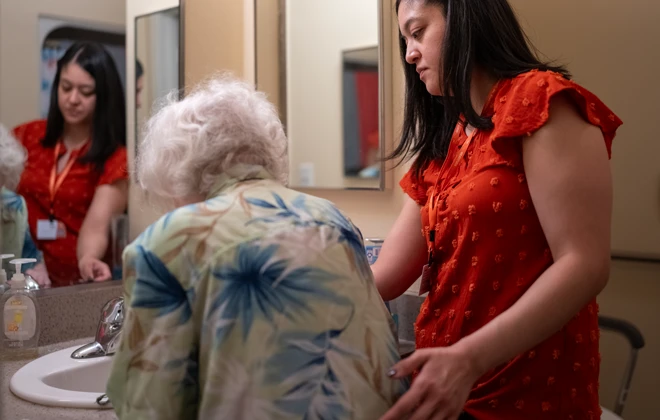
Task-oriented training can also be utilized to allow a person to practice tasks and activities they do during their day-to-day life. For example, standing for hygiene tasks in the bathroom or cooking a meal incorporates standing endurance and upper body movements and coordination, or walking to the mailbox, which incorporates walking safety and being able to navigate on uneven surfaces. Task-oriented training allows a patient to practice the full skill and to regain sequencing strategies to correctly perform the specific task.
Functional strength training is a vital component of stroke rehabilitation, incorporating functional tasks, such as standing up from sitting, to strengthen specific muscle groups.
Constraint-induced movement therapy is a type of therapy that reduces the movement of the stronger side through a sling or some type of constraint, which then forces the patient to perform all activities with the weaker limb. This is often used in the upper body to strengthen arms and increase the function of the involved side.
Motor imagery and mind-body connection training is a patient picturing a movement or type of functional activity performed in the correct way before performing the activity. This technique helps develop the mind-body connection.
Throughout a patient's course of therapy, the overall goal will be to help regain lost movement. If higher level assistive devices are needed, a physical therapist can measure a patient for orthotic devices, wheelchairs, or other assistive devices. If new devices are required, a physical therapist will provide education and training on the proper use of devices to the patient, their family, and caregivers.
A home exercise program is given during every physical therapy plan of care and will be tailored to the patient. Education will be provided on proper exercise techniques and the importance of ongoing participation in home exercise programs to see long-lasting results.
Stroke Rehabilitation is an ongoing process and requires an interdisciplinary approach to achieve long-lasting and beneficial results for each patient.
- Deutsch, Judith. “GUIDE: Physical Therapy Guide to Stroke.” Edited by Yasser Salem, Choose PT, 24 Apr. 2021, www.choosept.com/guide/physical-therapy-guide-stroke.
- Mayo Clinic Staff. “Stroke Rehabilitation: What to Expect as You Recover from a Stroke.” Mayo Clinic, Mayo Foundation for Medical Education and Research, 17 Apr. 2024, www.mayoclinic.org/diseases-conditions/stroke/in-depth/stroke-rehabilitation/art-20045172.
- Yetman, Daniel, and Jamie Elmer. “Physical Therapy for Stroke Patients: Benefits, Techniques, More.” Edited by Debbie Nurmi, Healthline, Healthline Media, 28 Aug. 2023, www.healthline.com/health/stroke/physical-therapy-for-stroke-patients#what-to-expect.
Recent Articles
-

Stay Strong This Fall: Why Movement Matters More Than Ever
Fall has a way of quietly shifting our daily routines before we even realize it. As daylight fades earlier and the weather turns cooler, outdoor walks become less inviting, holiday planning picks up, and we naturally spend more time indoors. When these seasonal shifts happen, our overall physical activity can quietly drop right alongside the temperature. -
Beyond Balance: Dynamic Strength for Fall Prevention
When discussing fall prevention for adults over 50, standard advice almost always centers on environmental modification: clearing cluttered hallways, removing loose throw rugs, improving indoor lighting, and installing bathroom grab bars. While these precautions are a vital first step in making a home safer, environmental fixes address only one side of the equation. -
FOX Rehabilitation’s Jason Hazel Elected to Argentum Board of Directors
FOX Rehabilitation is proud to announce that its Chief Growth and Strategy Officer, Jason Hazel, PT, DPT, has been elected to the Argentum Board of Directors, joining a distinguished group of senior living leaders committed to advancing innovation, operational excellence, and compassionate care across the industry.