

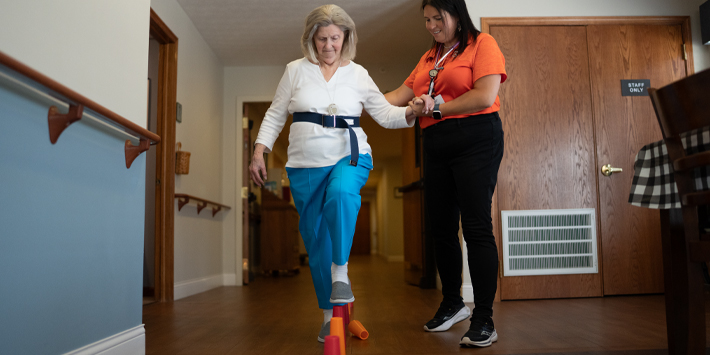
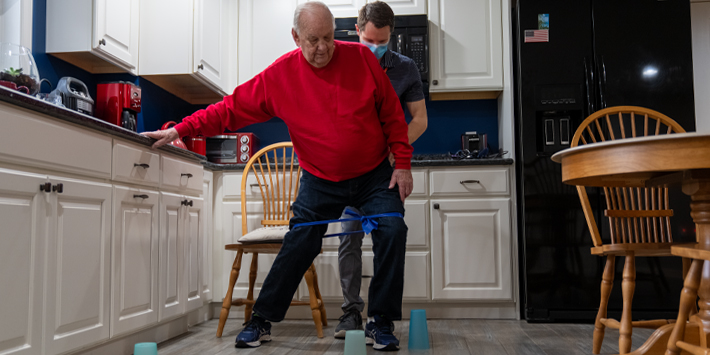
Most care is provided in the home, where your therapist can address the activities and challenges you experience every day. When clinically appropriate, limited parts of physical therapy care may also be supported through virtual visits, such as education, exercise review, or caregiver training.
Physical Therapy May Help With
-
Balance & Falls
Balance concerns, fall risk, or fear of falling
-
Muscle Weakness
Muscle weakness or reduced endurance
-
Mobility Issues
Difficulty walking, standing, or using stairs
-
Reduced Flexibility
Pain, stiffness, dizziness, or reduced flexibility
-
Daily Activities
Returning to daily activities after illness, injury, or a hospital stay
-
Caregiver Education
Caregiver education and support for participation at home and in the community
How Physical Therapy Can Help



Frequently Asked Questions
-
Physical therapy may help if you notice changes in strength, balance, walking, endurance, flexibility, or pain. It may also help after an illness, injury, surgery, hospitalization, or fall.
-
No. Exercise may be part of the plan, but your therapist may also address walking, balance, fall prevention, pain, transfers, home safety, and caregiver education.
-
When clinically appropriate, physical therapy may be supported virtually. Your therapist will determine the safest and most effective setting for your care.



-
Where We Treat
Find treatment38 states + Washington, D.C. and growing! Take a look at where FOX is currently treating. Keep checking back as we constantly expand to new territories.
-
-
Wellness Services
Learn MoreStart your wellness journey—on your terms—with in-person or virtual one-on-one sessions in physical, occupational or speech therapy or with a fitness specialist.