
How to Achieve Successful Outcomes with Challenging Patients
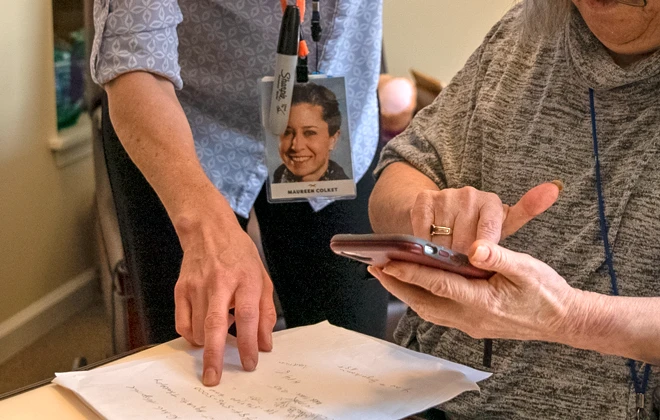
By Maureen Colket, MA, CCC-SLP, LSVT LOUD Certified Speech-Language Pathologist, Pennsylvania SW
We are taught in our respective graduate school programs how to diagnose and treat patients for their rehabilitation needs. There is a linear progression in school studies of learning typical body systems, followed by what happens when diseases and disorders interrupt these systems. Next, we discover how to implement the best treatment approaches and to improve and manage the variety of diagnoses. But what happens when you enthusiastically lay out the plan and your patient says, “I’m not doing that?” While it’s true that most patients are accepting and appreciative of a clinician’s services, there are those who are not so ready. Rather than looking at these patients as those who “refuse,” let’s think of these situations as a challenge to unlock something that is keeping the patient from accepting care.Psychological Influence
Managing life with a new diagnosis or disability is life-altering in so many ways. Patients handle these changes in different ways and one’s emotional status can wildly fluctuate from one day to the next. During an evaluation, it is important to take into consideration the psychological state of your patient. Depending on your comfort level, you can ask a variety of questions to help determine this:- How are you managing with the recent changes?
- What is your support system like?
- What do you do to keep busy?
Change of Scenery
While it would be nice to transport a therapy session to the beach or other picturesque locale, let’s not forget we can modify the “view” from home for our patients. This can be done by tapping into the senses and making modifications:Visual Modifications
- Relocate! A welcome change can be as simple as relocating a session from a bedroom where the patient spends the majority of the day due to mobility issues or living in a one-bedroom apartment in a senior living center.
- Take advantage of outdoor time whenever possible!
- Work in an area containing family photographs or bring them to the patient’s area if possible. Being surrounded by those you love, even if it’s only a photograph, can be very motivating!
- Change the lighting to suit your patient. Does dim light help or hurt the situation? Would extra brightness help with focus and bring a more cheery personality?
Auditory Modifications:
- Add music! An instant mood booster for many, music can be played in the background (or turned up!) to improve the ambiance. Asking your patient to choose the music they wish to hear is a small, but true, moment of empowerment.
- By contrast, make it quiet. While we are able to ignore distracting sounds in an environment, this might be very challenging for our patients. Any ways that you can reduce distracting noises can be helpful (e.g., turn off television/radio, put away or silence the patient’s cell phone if allowed, ask caregivers to avoid interrupting for the duration of the session).
- Make it soothing! You might consider playing peaceful sounds such as ocean waves for part or all of your session.
Maximize Carryover
At the end of our time with a patient, the aim is reaching maximum functional potential as well as maintaining that level long after therapy sessions end. It’s worth going the extra mile to implement an effective home exercise program that is specific to each patient. These programs might all look a little different and that is a good thing! Some tips for effective carryover include:- Be specific about the time needed to complete the HEP so they can plan accordingly
- Provide a suggested schedule to follow for the HEP
- Keep the HEP concise for ease of understanding as well as quick visual access
- Emphasize the importance of the HEP
- Require that the patient and/or caregiver perform the HEP for you prior to discharge
- Make the HEP fun by focusing on highly preferred exercises/tasks. Don’t be afraid to get creative!
Recent Articles
-

Stay Strong This Fall: Why Movement Matters More Than Ever
Fall has a way of quietly shifting our daily routines before we even realize it. As daylight fades earlier and the weather turns cooler, outdoor walks become less inviting, holiday planning picks up, and we naturally spend more time indoors. When these seasonal shifts happen, our overall physical activity can quietly drop right alongside the temperature. -

Beyond Balance: Dynamic Strength for Fall Prevention
When discussing fall prevention for adults over 50, standard advice almost always centers on environmental modification: clearing cluttered hallways, removing loose throw rugs, improving indoor lighting, and installing bathroom grab bars. While these precautions are a vital first step in making a home safer, environmental fixes address only one side of the equation. -
FOX Rehabilitation’s Jason Hazel Elected to Argentum Board of Directors
FOX Rehabilitation is proud to announce that its Chief Growth and Strategy Officer, Jason Hazel, PT, DPT, has been elected to the Argentum Board of Directors, joining a distinguished group of senior living leaders committed to advancing innovation, operational excellence, and compassionate care across the industry.