
How Do I Successfully Document My Skills?
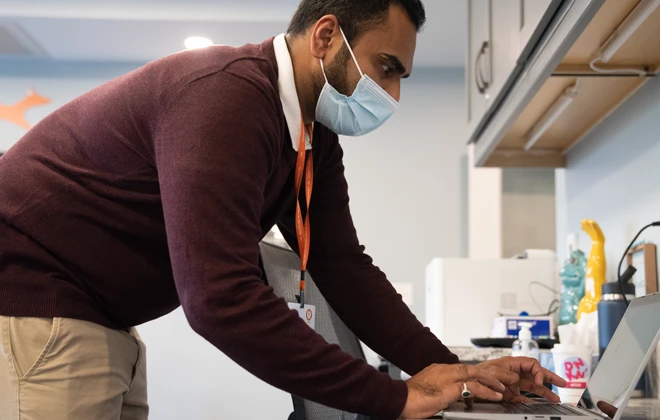
By Samantha Danz, OTR/L Occupational Therapist Wisconsin Southeast 1
Congrats! You’ve passed your boards and are now starting your career with FOX as a new clinician! Now what? You’re nervous, you're intimidated, and you want some guidance and reassurance that you’re on the right track. At FOX, we provide all of that through our Emerging Professionals Mentorship Program. As a seasoned clinician, I have had several Level II Occupational Therapy students on their last rotation, provided shadowing experiences for potential new clinicians or undergrads, and have also been a sponsor and a mentor for new hires here at FOX. I love helping people realize their skill, because I think as a newly graduated professional, that’s the hardest thing to see. You can do this. You have the skills. But how do you successfully document that?What is My Skill?
The best advice I can give you is to recognize that your opinion, skill, and training matter. There have been countless times I have had to call a doctor’s office regarding a mutual patient for an issue that otherwise wouldn’t have been addressed or known, and a few times, have saved a patient’s life. Your sessions matter, your time matters, and your insight matters. Now you have to show that in your notes. Oftentimes, we forget that just obtaining manually vitals is a skill in and of itself. But you have so many more skills than you might be giving yourself credit for:- Your trained observation
- Progressing and regressing activity and exercise challenges
- Therapeutic use of self and building rapport with your patients quickly
- Palpation
- Manual therapy
- Differential diagnosing through the administration of special tests
- Identification of outside factors that could be impacting achieving a goal
- Triaging what goals to set
- Creating appropriate HEPs
- Educating family, caregivers, and other clinical staff
How Do I Document My Skill?
In my experience training new clinicians, documentation is the biggest hurdle to jump. This could come from learning a new electronic documentation system, but also because describing what you did and what you observed can be challenging to put into words. There is a template I give to all of my students, mentees, or sponsored clinicians which has helped to improve their verbiage. One important goal of any note should be that any clinician who has never met this patient before can go in and repeat exactly what you did with them. It should give a covering Occupational Therapist insight into what you’ve been working on, how they’ve been responding to your treatments, what you have been emphasizing, and how this is helping them to achieve their functional goals. [contentupgrade id="12410"]How Do I Document My Skill Quickly?
The next big piece is to really push for point-of-service documentation. Easy ways to do this are:- During their recovery time between exercises and activities
- When you’re obtaining their vitals
- When you’re guiding exercises don’t require guarding for safety
How Often Should I Address Treatment’s Specific Goals?
I have my patients attempt to demonstrate their functional activity goals regularly so that we can see the progress they’ve made with their exercises and activities. This allows you as the clinician, or a covering clinician, to see if your activity selection is actually promoting your patients’ success and progress towards their functional goals. Additionally, if a progress note sneaks up on you, you have a recent treatment to carry over! Lastly, know that you’re smart, you’re capable, and you’re qualified! You have a team behind you to support you and your growth as a clinician, and someday, you’ll be providing your own advice.Recent Articles
-

Stay Strong This Fall: Why Movement Matters More Than Ever
Fall has a way of quietly shifting our daily routines before we even realize it. As daylight fades earlier and the weather turns cooler, outdoor walks become less inviting, holiday planning picks up, and we naturally spend more time indoors. When these seasonal shifts happen, our overall physical activity can quietly drop right alongside the temperature. -
Beyond Balance: Dynamic Strength for Fall Prevention
When discussing fall prevention for adults over 50, standard advice almost always centers on environmental modification: clearing cluttered hallways, removing loose throw rugs, improving indoor lighting, and installing bathroom grab bars. While these precautions are a vital first step in making a home safer, environmental fixes address only one side of the equation. -
FOX Rehabilitation’s Jason Hazel Elected to Argentum Board of Directors
FOX Rehabilitation is proud to announce that its Chief Growth and Strategy Officer, Jason Hazel, PT, DPT, has been elected to the Argentum Board of Directors, joining a distinguished group of senior living leaders committed to advancing innovation, operational excellence, and compassionate care across the industry.