
5 Unique Outcome Measures for Higher Functioning Older Adults

By Alexandra Germano, PT, DPT, GCS, AIB-VR Physical Therapist
Older adults who live independently in the community frequently utilize FOX Rehabilitation services. These patients can vary in their functional capacities, body strength, and balance, which means appropriate assessment strategies are vital. By using challenging outcome measures, we can correctly identify patients who have the start of some impairments in balance, strength, and endurance that would become problematic later on and lead to falls, slips, trips, and other losses of independence. Older adults who present as functionally independent in the community can often achieve perfect scores on traditional outcome measures used with older adults, including the Five Times Sit-to-Stand Test, Berg Balance Scale, and Four Stage Balance Scale. However, these tests have what is known as a “ceiling effect” amongst people with higher levels of function. If we only utilize these measures with this specific subset of older adults, we could very well write them off as “normal” or “not a fall risk” and discharge them early. This article will show you five additional outcome measures that may be able to capture a better picture of physical function in the higher functioning older adult. It is important to note, that while these tests cover physical functioning, higher-level older adults are also candidates for thorough social and cognitive screening.1. Mini Balance Evaluation Systems Test (Mini BESTest)
The Mini BESTest is a challenge balance outcome measure that assesses four different components of balance:- Anticipatory Postural Control
- Sensory Orientation
- Reactive Postural Control
- Dynamic Gait
2. The 1-Minute Sit-to-Stand Test (1-MSTST)
Most people typically think of the Five Times Sit-to-Stand Test or 30-second Sit-to-Stand Test when choosing a lower-body functional outcome measure. The 1-MSTST takes this up a notch. It requires minimal equipment, and minimal time, and can give us more information about someone’s exercise capacity than the other sit-to-stand variations. This test is starting to be considered as an alternative to the 6 Minute Walk Test which could improve our examination efficiency. Population-based reference values for this test can be found here and can help us identify those with decreased lower body muscular strength and endurance. Time to administer: 1-2 minutes Populations studied in: End-stage renal disease, COPD, palliative care, adults, osteoporosis, cystic fibrosis, and hemodialysis. Things to consider: As patients perform this test and get familiar with it, their performance tends to improve. We also do not yet have established minimal clinically important differences and more specific data for certain diagnostic-specific populations which can limit our ability to apply labels like “increased falls risk” to our patients.3. Floor Transfer Test
In the Floor Transfer Test, a patient moves from a standing position to seated on the floor and then back to standing. This test measures a very functional and highly important skill for older adults to have while living independently in the community. There is more research continuing to come out about the importance of this test as a measure of readiness for independent living Time to administer: Less than 5 minutes Populations studied in: Stroke, chronic stroke, community-dwelling older adults Things to consider: This can be a very important screening tool for many older adults. However, we lack established normative data amongst a variety of sub-populations. Comparing a patient’s starting time for this test and a retest during subsequent visits could still provide us with a valuable measure of progress. Also consider screening your patient’s functional lower extremity strength prior to performing the floor transfer (with a Five Time Sit-to-Stand), as it might have been a long time since the patient was on the floor. Lastly, consider the environmental setup, guarding, and use of gait belts to ensure success with this transfer in case the patient needs more help.4. Community Balance and Mobility Scale
The Community Balance and Mobility Scale has the ability to decipher a decline in balance that occurs with aging in healthy individuals, which is exactly what we want in a screening tool. We want to better identify who would benefit from rehabilitation in a more preventative nature versus waiting for some significant, life-altering event to happen (like a fall). Another great part about this test is the ability to compare age-referenced data across the decades in order to interpret patient scores. This test is able to capture static and dynamic balance tasks, incorporates functional activities such as turning, walking with head turns, carrying objects and stairs, and challenges patients with power activities such as running and jumping. By performing a test with 13 items you are also able to get a good picture of your patient’s endurance. Time to administer: 20-30 minutes Populations studied in: Healthy older adults, stroke recovery, cerebral palsy, brain injury Things to consider: This is a more comprehensive assessment, meaning you will need to account for time when performing this measure. However, because of the variety of items on this test, you can easily translate each of these into treatment for the patient. This test also requires equipment including:- Laundry basket/box
- Two 7+ lb weights
- Bean bag
- A visual target
5. The 3-m Backwards Walk Assessment (3MBW)
The 3-m Backwards Walk Assessment tests a vital skill for any adult. Walking backward is a skill that particularly diminishes with age and deconditioning. This skill can be more sensitive to age-related changes in mobility and balance as compared to forward walking. Studies are beginning to reveal that walking faster than 3.0 seconds on the 3MBW was unlikely to report falling but a score over 4.5 seconds was likely to have reported falling. This test has also been shown to have high diagnostic accuracy for retrospective falls in people with Parkinson’s Disease which is promising. Time to administer: 1-2 minutes Populations studied in: Older adults, Parkinson’s Disease Things to consider: This is a very singular outcome measure, which means we likely need to perform other outcome measures to paint a better picture of our patient’s comprehensive balance. This measure also lacks significant research behind it to identify normative values for at-risk populations. Other outcome measures, such as the Community Balance and Mobility Scale, incorporate backward walking and have more comprehensive data. What is nice about this tool is its ability to be used as a screening tool to quickly identify the need for further investigation. By using these more challenging outcome measures I have been better able to identify those with more subtle deficits in balance and strength. This means I have been able to provide interventions to those who may appear to not need rehabilitation services and potentially prevent future decline and improve my patients’ functional capacities. For these patients, it means being able to play with their grandchildren for hours, not minutes, being able to do multiple errands in a row versus planning one event a day, and having more energy for extra things that make life special!Recent Articles
-

Stay Strong This Fall: Why Movement Matters More Than Ever
Fall has a way of quietly shifting our daily routines before we even realize it. As daylight fades earlier and the weather turns cooler, outdoor walks become less inviting, holiday planning picks up, and we naturally spend more time indoors. When these seasonal shifts happen, our overall physical activity can quietly drop right alongside the temperature. -
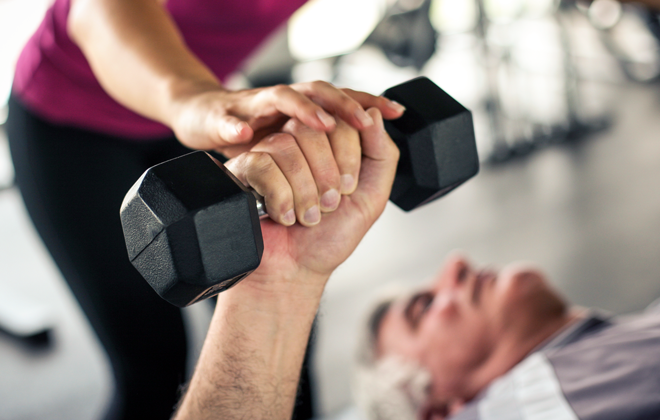
Beyond Balance: Dynamic Strength for Fall Prevention
When discussing fall prevention for adults over 50, standard advice almost always centers on environmental modification: clearing cluttered hallways, removing loose throw rugs, improving indoor lighting, and installing bathroom grab bars. While these precautions are a vital first step in making a home safer, environmental fixes address only one side of the equation. -
FOX Rehabilitation’s Jason Hazel Elected to Argentum Board of Directors
FOX Rehabilitation is proud to announce that its Chief Growth and Strategy Officer, Jason Hazel, PT, DPT, has been elected to the Argentum Board of Directors, joining a distinguished group of senior living leaders committed to advancing innovation, operational excellence, and compassionate care across the industry.