By Renee Cocozza, MS, EP
FOX Optimal Living Exercise Physiologist
Heart disease is the most frequent condition in older adults. Therefore, it is more important than ever for residents in senior living communities to maintain healthy hearts. Heart health has a direct correlation to functional wellness. Exercise Physiologists following evidence-based recommendations by the American College of Sports Medicine can significantly improve the overall quality of life in senior living populations.
How Heart Health relates to Functional Wellness and Cardiovascular Exercise Benefits
Heart health is connected directly to functional wellness. The heart is responsible for fueling the body with oxygen and nutrients. Due to the heart's never-ending workload, it is essential to take care of it. When the heart starts to fail, the body as a whole will too. Often when clients have a physical check-up, their physician may ask them about their medical wellness, but not questions about their functionality, such as are you able to walk for a long-distance? Can you get dressed safely? Can you shower without experiencing shortness of breath? These are all activities that relate to functional wellness and can be impacted by the condition of the heart.
There are lots of lifestyle factors that can impact the heart's ability to function properly, including but not limited to diet, smoking, and the main focus of this article, exercise. It is important to have a lifestyle that includes being active to prevent cardiac diseases or from cardiac diseases progressing.
Exercise will help control chronic diseases, such as hypertension (high blood pressure), high cholesterol, COPD (Chronic Obstructive Pulmonary Disease), DM (Diabetes Mellitus), and other conditions that damage the heart. When the heart is failing due to disease, it is going to cause the individual to have low energy, which impacts quality. They could experience shortness of breath, dizziness, lightheadedness, chest pain, irregular heartbeat, and syncope. Being symptomatic can lead to falling, sleeping more, being less active, and relying on others for help, which can cause them to reach the failure stage on a functional wellness perspective. When targeting the heart with proper exercise, we are specifically targeting the diseases and symptoms that are causing the dysfunction of the heart. Exercising will produce positive stress on the heart and improve functional wellness!
How to Maintain Heart Health in a Senior Living Community and Exercise Prescriptions to Improve Cardiovascular Function for Non-ambulators
Maintaining heart health within the older adult population is achievable with practical goals and taking precautionary measures. Speaking from experience, you will have older adults that are internally motivated to move and others who think they're too old or have pain. It is important to use gentle encouragement, build a trusting relationship, and educate them on why they should exercise.
The American College of Sports Medicine (ACSM) recommends 150 minutes per week of moderate-intensity cardiovascular exercise. This is working at 40-60% of heart rate reserve. Heart rate reserve is the difference between maximum heart rate (reached during exercise) and resting heart rate. It is also important to keep in mind that each individual is not going to be at the same functional level, so using a tier system (low, medium, high) is beneficial.
Some older adults could be very deconditioned and it is important to consider that factor before pushing them to work at a moderate-intensity level. Begin with increasing endurance first and then intensity. Starting slow, and increasing the intensity to meet the cardiovascular recommendations that are appropriate is suggested. Assessing the residents and using functional outcome measures, such as gait speed and TUG (Timed Up and Go) tests, indicates which tier is appropriate for each individual.
The most common form of cardio exercise is a senior community setting is walking/strolling, using a stationary bicycle or NuStep machine. Walking and strolling clubs should be offered most days of the week for 30-minute sessions. During these 30 minutes, it is important to have the residents walk for as long as they can until they need to rest. Also, breaking the 30 minutes up into 10-minute bouts is appropriate if necessary.
Another realistic approach to reaching cardiovascular goals within this population is exercise classes (sitting or standing) while remaining in an upright posture and using proper breathing techniques. Proper breathing is critical during strenuous activities, especially for cardiac diseased individuals. Breathing out during exertion and breathing in during the relaxation phase of the exercise. The ACSM recommends 10-15 reps for muscular endurance and 2-3 sets of each exercise. Depending on one's fitness level, older adults can be challenged with higher repetitions. When having the residents do high reps continuously, they will be working very hard and will get in the recommended cardiovascular work they need to maintain their heart health. All exercises can be modified. Some senior living communities have pools. Swimming and water aerobics provide excellent cardiovascular benefits (and they're also great for arthritis!).
Exercise recommendations for non-ambulators is a similar approach from a seated position. Fortunately, there are effective strategies for cardiovascular exercise for non-ambulators. To name some:
- Upper-body ergometer (arm bike)
- Chair Zumba/dancing
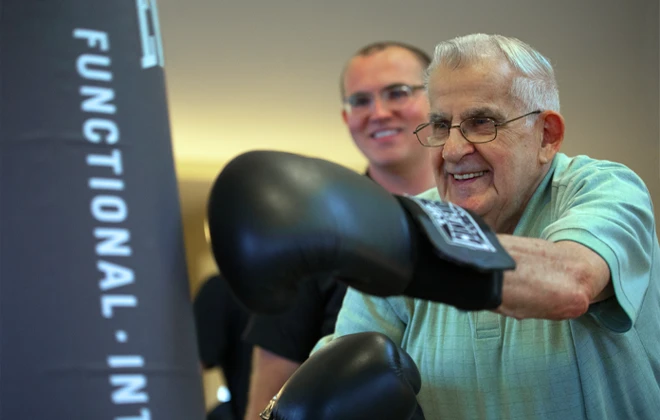
- Seated boxing
- Adapted yoga- can be challenging
- Wheel yourself (if possible)!
Healthcare professionals working with older adults with chronic diseases understand the function and the relationship of the body parts. They can recognize symptoms that suggest someone should stop exercising. Working closely with the residents, knowing their medical history and monitoring vitals allows experts to prescribe cardiovascular exercise programs individualized for them. Using the RPE (rate of perceived exertion scale) or talk tests are other ways to measure workload/intensity. An RPE scale ranges from 0-10, 0 being at rest, and 10 as working very very hard. During group wellness programs, exercise physiologists and/or clinicians should ask the residents to hold up the RPE they're feeling. Each tier should reach a certain RPE (Low= 1-3, Medium= 4-5, High= 5-6). This allows the exercise physiologist to identify who needs to be challenged more and who should slow down.
Exercise Physiologists and clinicians prescribe the most efficient, evidence-based, and monitored programs to help older adults maintain their hearth health in senior living communities. According to the “Human Kinetics Journal,”
“less than 27% of senior living communities follow the American College of Sports Medicine guidelines” for 150 minutes of moderate-intensity cardiovascular exercise at least 3 days per week. The effectiveness of exercise programs offered at senior living communities should be evaluated. Following these guidelines will help keep residents mobile, improving their heart health, and maintaining functional wellness!