
How Physical Therapy Can Help Treat Multiple Sclerosis
By Jordan Hoffman, PT, DPT
SLC Lead Clinician, Pennsylvania
Multiple Sclerosis is a disease that affects the body’s central nervous system. It is characterized by inflammatory attacks on the central nervous system that result in a loss of myelin. Myelin is a type of material that covers nerves and helps conduct nerve impulses. Symptoms vary depending on the area of the nervous system affected. Most symptoms present as mobility deficits, altered sensation, and altered cognitive and emotional affect. The cause of MS is not known, but research suggests genetic, lifestyle, and environmental factors. MS affects about 2.2 million people worldwide, and that does not account for families and caregivers who are also affected.
Treating the Individual
MS has different symptoms that are categorized into relapses and remissions. Relapses are exacerbations of symptoms, and remissions are periods where no new symptoms arise. Over time, as the disease progresses, symptoms tend to progress as well. MS is an unpredictable and unique disease that affects each person differently. A physical therapist should be prepared to assess each patient’s symptoms and current presentation to give a well-rounded rehabilitation approach.
Since MS symptoms present differently in each person, a physical therapy examination should be tailored to the patient’s deficits and current presentation. During this, the patient and family members can communicate with the physical therapist about their current level of deficits and their previous level of function. Common symptoms for people with MS include mobility changes, balance, and breathing—each of which can be addressed through physical therapy.
For therapy examinations and treatment sessions, it should be noted that a patient’s fatigue levels and symptoms can be more prevalent if they are going through a relapse episode. Examinations and treatment sessions should be tailored so that a patient does not become overworked and can comfortably recover after treatment within 2 hours. During times of relapse, seated balance, breathing techniques, and stretching may be good options so as to not overwork a patient.
Top Treatment Concerns
Ambulation safety is a large component in rehabilitation for patients with MS. Depending on the disease progression, ambulation training looks different for each patient. During the initial stages of MS, ambulation training may look like ambulation endurance to incorporate aerobic systems. During the later stages of MS, it may look like prescribing an assistive device to reduce the risk of falls and increase stability during ambulation. Always consider realistic goals and strategies to enhance functional performance.
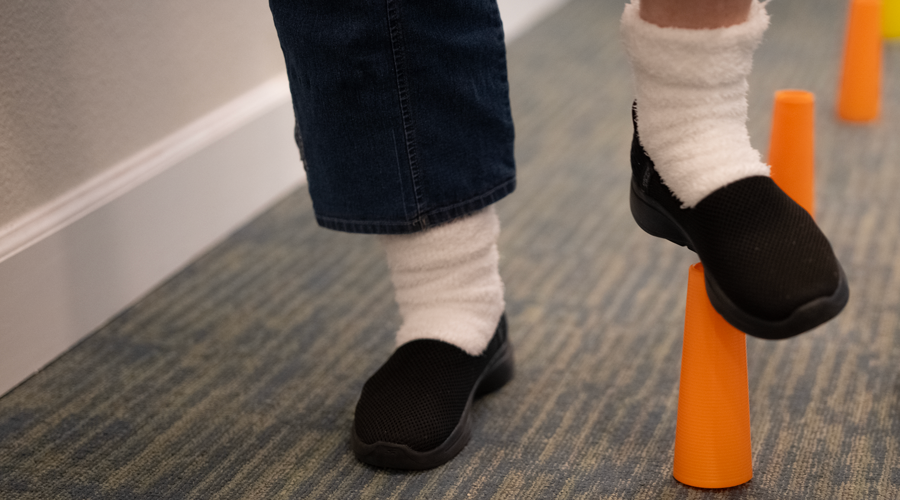
Balance is an important focal point of rehabilitation for patients with MS, as people with MS have fall rates greater than 70% when compared to age-matched peers. Depending on the disease progression, balance activities can either be performed in standing or sitting, engaging lower extremity or trunk postural control.
Stretching and flexibility are vital parts of MS management to avoid muscle tightening and contractures. During a physical therapy examination, the clinician may identify muscles that are tight and will perform manual stretching techniques and will supplement with an at-home stretching routine to target specific musculature. Strengthening opposing muscle groups can also help reduce tightness and counteract the tight muscles.
Muscle weakness is also a common symptom in patients with MS. Muscle weakness can result in a broad range of loss of function. During an examination, strength testing will be performed by the physical therapist to identify specific weak muscle groups and their functional impact. Strengthening techniques can be performed in sitting or standing depending on the patient’s functional ability. Resistance strength training is recommended for patients with MS, but it is important to prescribe exercises in correlation with the patient’s fatigue levels. All exercises/movements should be patient-centered and created based on the evaluation and constant reassessment of the patient’s abilities throughout the plan of care.
Tai-chi and yoga have been found to have beneficial results in those with MS. Tai chi incorporates low-intensity movements in either sitting or standing while including deep breathing techniques. Yoga includes functional movements for strength and flexibility, breath work, and meditation. Using these principles may provide good outcomes for your patients.
Managing Multiple Sclerosis
Patient, family, and caregiver education is vital for effective management of MS. Home exercise programs and walking programs are often used to maintain levels of function achieved throughout a physical therapy plan of care. Education provided to patients will include details around fatigue levels, exercises, and activities appropriate to perform depending on the patient’s fatigue presentation. Family and caregiver education can be utilized to address assisting patients with activities of daily living, ambulation and transfer safety, and caregiver and family support.
Due to the progression of multiple sclerosis and relapse and remissive episodes, a patient may need a longer plan of care to achieve their goals. Even when a home exercise plan is established, frequent check-ins from physical therapists during times of relapse are vital for MS management. Each patient with multiple sclerosis has unique challenges, and a collaborative effort from each patient, physical therapist, families, and caregivers result in the best outcomes. Additionally, it may be beneficial to involve other disciplines such as occupational therapy and/or speech-language pathology.
- “Guide: Physical Therapy Guide to Multiple Sclerosis.” Edited by Tara McIsaac, Choose PT, APTA, 24 Apr. 2018, www.choosept.com/guide/physical-therapy-guide-multiple-sclerosis.
- Rohrig, Mandy. A Resource for Healthcare Professionals Physical Therapy in Multiple Sclerosis, https://www.nationalmssociety.org/for-professionals/for-healthcare-professionals.