
The Unmet Needs of Patients with Neuromuscular Disorders
By Suzy Tremaine, CDP
Account Manager
Think of any ordinary activity you do daily—getting out of bed, brushing your teeth, using the toilet, taking a shower, walking up or down a flight of stairs, making and eating a meal, driving your car, grocery shopping, taking a walk in the park—all of these can be affected by impaired muscle function.
There are many types of neuromuscular disorders and even more causes of these disorders. What they all have in common is the progressive worsening of muscle function which can cause immobility that in turn compromises dexterity and the ability to walk. Clinicians who treat patients with neuromuscular disorders are all too familiar with these scenarios. When looking at neuromuscular disease management for your patients, consider the role physical therapists, occupational therapists, and speech-language pathologists play and the organizations they work for.
Who is FOX Rehabilitation?
As an account manager who educates physicians and their teams on the FOX Rehabilitation difference in treating older adults to “Be Stronger, Live Better Longer,” I have found FOX’s unique clinical model is highly successful in treating patients with neuromuscular disorders such as MS and Parkinson’s.
Since 1998, FOX has offered in-home expert clinical services for older adults in over 23 states and Washington, D.C., and is growing each year. FOX believes people are strong—all people. Our mission is to rehabilitate lives by believing in the strength of people—empowering our teams to facilitate and provide clinically excellent care to our patients, allowing them to achieve what they once thought impossible: optimal function to live their lives.
This mission is important because it talks about the clinician and patient relationship. It speaks to the fact that it is the clinician’s duty to educate their patient on their true abilities and what they can achieve even if they thought it impossible.
- We believe in the power of exercise to restore and rehabilitate lives focusing on the patient’s independence through functional wellness.
- Licensed clinicians create a customized plan of care for each patient and execute that plan of care: 1 therapist and 1 patient on a journey together
Why is the FOX Model Different?
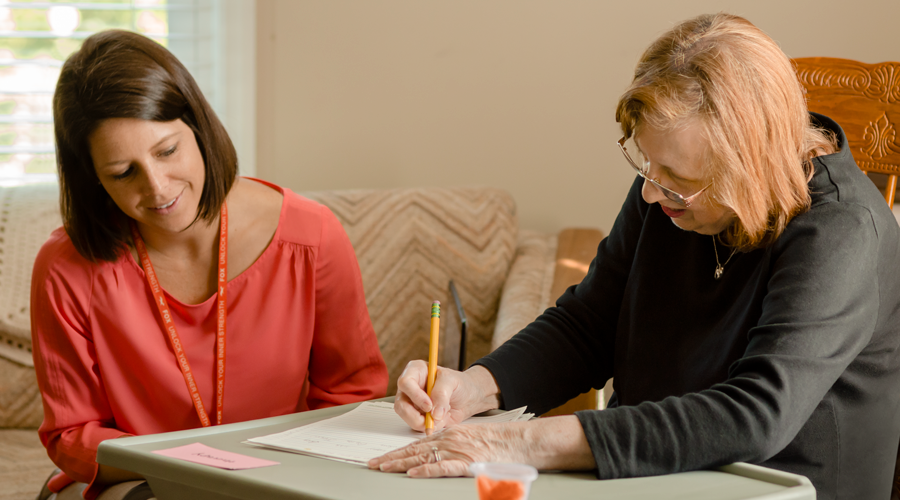
FOX Rehabilitation’s “Geriatric House Calls” model provides skilled physical therapy, occupational therapy, and speech-language pathology to older adults in their homes, billing under Medicare part B.
FOX clinicians only work with the older adult population and have extensive education, training, and experience with geriatric patients. Many have specialized training in chronic & progressive diseases including Parkinson’s (LSVT, SpeakOut, PWR!).
FOX’s clinical approach is evidenced-based and clinically doses therapy. This allows for fully comprehensive care in the patient’s home environment, improving both carryover and compliance.
What About Outpatient Rehab Brick and Motor Locations?
You can’t bring the fancy machines to the patient’s home, after all.
Most patients do not have the ability to travel or obtain transportation to outpatient brick and motor locations multiple days a week. The clinical evidence supports that patients working in their own environment, using their own stairs, furniture, and home layout, receive more benefit from their therapy.
How Does the FOX Approach Help People with Parkinson’s or Other Neuromuscular Diseases?
Neuromuscular diseases often manifest in a variety of symptoms that may benefit Geriatric House Calls after home health. The report by IQVIA Institute for Human Data Science on Oct 18 shares that fatigue, immobility, pain, and poor nutrition are a few of the unmet needs in the management of neuromuscular disease symptoms. Learn how FOX clinicians treat each of these hard to manage symptoms.
FOX Clinicians Treat Fatigue
- Strength and balance training in the patient’s home environment to decrease fatigue
- Functional endurance training
- Insight to make activities of daily living easier, including energy conservation
- Providing family and caregiver education
FOX Clinicians Treat Immobility
- Safety training to return the patient to the community and their desired activities, thus decreasing a sedentary lifestyle
- Ordering of custom assistive devices that fit your patient and their home environment
- Range of motion functional training including safe transfers
FOX Clinicians Treat Pain
- Address pain with stretching, massage, and manual therapy to build up tolerance and strength, working towards tolerance of functional therapy
- Education on modalities that can be performed safely in their home
- Medication management
FOX Occupational Therapists and Speech-Language Pathologists Treat Nutrition Needs
- Meal prep with education on nutritional value
- Ordering or shopping for nutritional meals
- Nutrition logs and reminders
- Identify the need for modified diet texture and educate the patient or their family on how to prepare
- Obtain adaptive silverware to maintain independence with self-feeding
FOX Clinicians Treat Cognition
- A unique stage-specific approach to dementia that uses prescribed interventions to increase the quality of daily interactions and manage the challenges that come with the diagnosis
- Advanced caregiver education with a focus on caregiver stress management, patient behavior management, communication strategies, and techniques to reduce the burden of care during activities of daily living
- Training on verbal and non-verbal communication strategies to facilitate communication of wants and needs
- Cognitive retraining to maximize attention, orientation, sequencing, executive functioning, and memory to improve function in the current environment and compensate for neuropsychological deficits
Continuing with FOX after traditional home health allows for the continued management of the patient’s disease progression. In turn, the patient has additional tools to progress to a higher degree of function rather than a higher level of care. When you improve people’s function, you have better satisfaction and higher levels of independence.
You also reduce overall healthcare costs. A 2019 peer-reviewed article in BMC Geriatrics shows that higher Patient-Specific Functional Scale scores, a measure of patient function, are associated with significant reductions in overall healthcare costs. When meeting with your next patient with a neuromuscular disorder, ask yourself, do they want to “Be Stronger, Live Better Longer?” If so, FOX is your resource to assist them in doing just that. When meeting with your next patient with a neuromuscular disorder, ask yourself, do they want to “Be Stronger, Live Better Longer?” If so, FOX is your resource to assist them in doing just that.