
4 Strategies for SLPs When Wearing a Mask During Therapy
By Kate Hoylman, MS, CCC-SLP
Speech-Language Pathologist
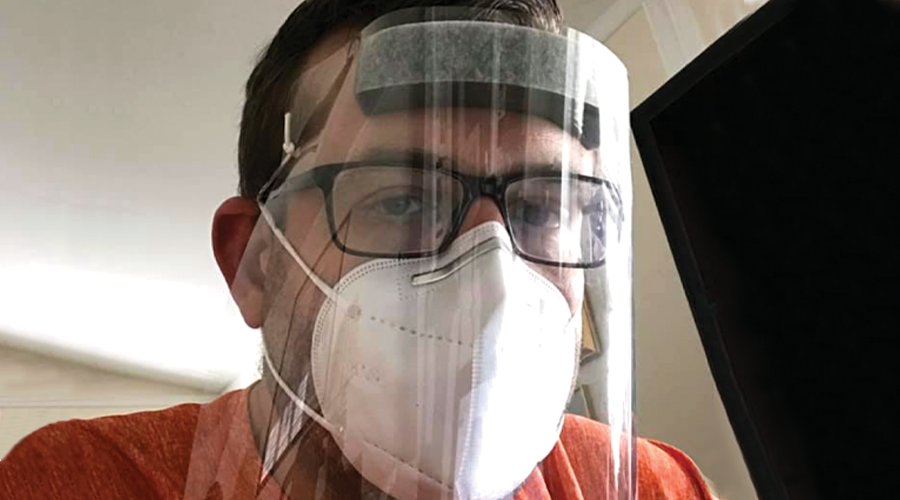
Providing speech therapy services while wearing a mask may sound like an oxymoron. However, for speech-language pathologists, today masks are a necessary reality to protect patients and therapists against Covid-19.
By nature of their work, SLPs are constantly using their own mouths to provide cueing and modeling for their patients. The easiest way to teach your patients is to show them what to do. When you are wearing a mask, that method is taken away. As a result, you are faced with the unique challenge of finding effective ways to teach and cue your patients in a way that is clinically excellent.
Luckily, as a speech-language pathologist, you are a creative problem solver. You’re up for this challenge.
Strategies to Implement During Masked Therapy sessions
Take pictures or videos of yourself modeling before the session
You can film yourself providing cueing. If the pictures/videos are saved in a folder to your computer, it will be easy to pull them up as needed during therapy sessions. You may also consider sending these pictures and videos to your patient. If they have access to them, they will be able to practice outside of your appointments. Don’t be afraid to reach out to your teammates for videos/pictures they have used as well. You can even share resources through Google Drive or Microsoft Teams.
Provide written cues
Consider stocking up on extra pieces of paper or a whiteboard for all sessions. When you have these tools readily available, it is easy to pull them out to test if written directions are helpful for your patient.
Involve caregivers from the beginning
This is an excellent opportunity to involve caregivers in the session and simultaneously complete caregiver training for a home exercise program. As the therapist, you can explain to the caregiver how to provide a phonemic cue or model to improve the patient’s motor speech or carryover of a specific compensatory strategy. You may not be able to show the caregiver the model because of your mask. However, verbal explanations can be very effective. The caregiver then provides the cue or model to the patient. If they don’t quite get it right, you can reteach until everyone feels comfortable. When caregivers are trained and able to provide assistance, the patient is able to engage in continuous practice and make progress towards their goals outside of your appointment with them.
Utilize MedBridge videos
MedBridge has so many excellent videos demonstrating dysphagia exercises with helpful descriptions of the purpose of each exercise. You can also find handouts on voice education that may be helpful. To access these resources, click on the “Patient Engagement” tab followed by “Patient Education.” You will find separate folders for both dysphagia and voice. All Fox clinicians have access to MedBridge. Otherwise, MedBridge can be purchased for a yearly fee.
As a speech-language pathologist, you have such a purpose during this challenging time. Your dysphagia patients need you to teach them to swallow safely to keep eating the foods they love. Your voice patients need you to empower them to keep their voices loud and strong so they can talk to their grandchildren on the phone. Your speech, language, and cognitive patients need you to assist them in communicating with their families during a time when they may be feeling more isolated. You are your patient’s partner and advocate, helping them to navigate through a world that is vastly different than the once they once knew.
Although these times may pose more challenges to your clinical practice, the work you are doing is valued and matters. Your patients need you. Possibly now more than ever.