
Lymphatic Tips to Help OT Patients Battle Edema
By Cristina Klymasz, MS, OTR/L, CBIS, RYT, CLT‑LANA, MSCS
Occupational Therapist, South Carolina
Edema is a common barrier to treatment. After surgery, injury, or neurological insult, edema arrives with a vengeance. Patients report soreness, heaviness, and pain because of the edema. As occupational therapists, we find edema is a barrier to range of motion and progressing a plan of care.
Many of us address edema via retrograde massage. We learned this in school and it can move some edema during a session. But retrograde massage is slow-acting, and typically, the fluid returns after completing retrograde massage. So what should we do instead?
Using Lymphatic Techniques to Address Edema in Occupational Therapy
Current research recommends using methods from lymphatic therapy in order to quickly and effectively treat edema. A recent article in the Aesthetic Surgery Journal advocates for plastic surgeons to adopt lymphatic practices for managing edema after cosmetic surgery, as it leads to quicker resolution. In regards to orthopedic surgery and injuries, a recent meta-analysis of edema and lymphatic therapies indicated a quicker and more effective addressment of edema if lymphatic therapies are performed. In terms of neurologic insult and disease, recent research recommends non-invasive techniques to address the resultant edema. These non-invasive techniques are lymphatic techniques. Another recent article not only advocates for the use of lymphatic techniques to address the edema but explains the intricate role of the lymphatic system with the nervous system.
So what are these lymphatic methods and why do they work? Lymphatic manual therapies utilize the lymphatic system to move the resultant edema. Our lymphatic system’s primary role is to move unwanted debris, germs, bacteria, etc., through our body and excrete it via the urinary system. If we stimulate the lymphatic system, it will increase its rate of fluid absorption and move fluid throughout our body. If there is edema, we can stimulate the lymphatic system to absorb and move much of it for excretion.
The lymphatic methods traditionally used by non-lymphatic trained therapists are the following:
- Manual Edema Mobilization
- Range of Motion
- Compression or Therapeutic Taping
I’ll cover each in greater detail below.
1. Manual Edema Mobilization
Also called MEM, this method can be easily done at the initiation of a session to clear edema prior to your exercises and mobility. Below are the steps:
- First, the patient takes 10 diaphragmatic breaths. These breaths are taken in and out through only the nose to stimulate the diaphragm. The diaphragm is essential to be stimulated, as it massages a very large duct that will clear 75% of the fluid that is moved. Massaging the duct will allow for optimal fluid dynamics.
- Next, the therapist performs clearing u-shaped strokes with the hand over the body part that is endemic. These strokes should be performed distal to proximal in order to clear the area above for fluid passage.
- Lastly, the therapist performs u-shaped strokes proximal to distal in the endemic area. This is called a flowing u-massage because the fluid will be moved distally.
Unsure how to perform the U-strokes or want more information? Musculoskeletal Key is a website that has thorough steps and pictures to help. If you’re visual or would prefer a video, a good starting point is a how-to video by Dr. Borst.
2. Range of Motion
After performing MEM, exercise is recommended. Our muscles will continue to move the fluid via a process called lymphangiomotoricity. This is a perfect time to perform the exercises that you had planned or perform functional mobility/ADLs. Range of motion is noted to be the best for moving fluid. It is gentle and will not be strenuous. Below are some examples of effective range of motion exercises that can be incorporated if appropriate for your specific patient:
- Shoulder rolls
- Neck circles, neck flexion/extension, neck lateral range of motion
- Wrist circles
- Biceps curls, either sans weights or with low weight (i.e. 1-2 pounds)
- Scapular retraction
- Digit flexion/extension
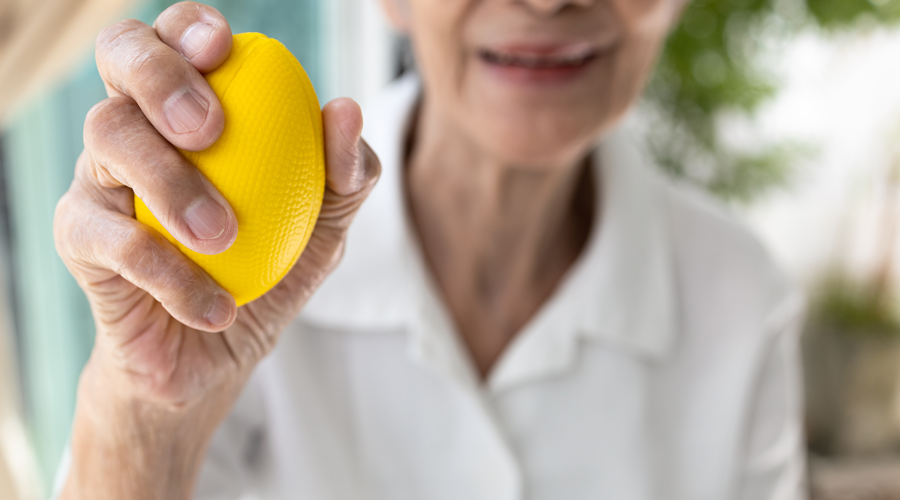
- Composite grip and release (if using a stress ball, ensure that the resistance is not strong)
- Knee lifts
- Knee flexion/extension
- Ankle circles, ankle flexion/extension, ankle in/eversion
- Heel/toe raises
Remember that anything strenuous can increase fluid, so it’s advised to stay away from more dynamic exercises, such as burpees, push-ups, jumping, etc
3. Compression or Therapeutic Taping
The last part of MEM is to provide compression via Coban or perform therapeutic taping. You can use Coban on the affected area, or kinesiology tape. If using Coban, try to avoid placing it too tight because it will restrict fluid motion. Coban is typically placed in a spiral fashion. If using Coban is new, or you’re looking for new tips, Dr. Borst has another great step-by-step video. 3M makes a 2-layer Coban specifically for edema and you can find research and training videos at the product website.
If using kinesiology tape, place it without tension to avoid halting fluid motion. Kinesiology tape is typically cut into an octopus shape. The “head of the octopus” is placed where you want the fluid to move. The “tentacles” are placed over the endemic area. You can purchase pre-cut kinesiology tape in this shape, if you prefer. There is vast literature regarding the use of kinesiology tape for edema. A great place to start is Labianca, L., et al.’s article. If you’re looking for visual directions, these two videos by CancerRehabPT are a great start: Taping of the Hand and Taping of the ankle/foot.
Helping Your Patients Fight Edema
By incorporating the above steps, the edema should move quickly, i.e. within a few sessions. From session to session, your patient will hopefully report less pain, stiffness, and discomfort and you should notice more range of motion. Once all the fluid is decongested, or resolved, you can start incorporating more complex and dynamic tasks. It is now time for you and your patient to celebrate because you both won the war against edema!