
How to Safely Transfer a Dementia Patient
By Jenna Grow, MS, OTR/L, BCG
Occupational Therapist, Pennsylvania
Have you ever tried to transfer a person with dementia, and they adamantly refused to move? It can leave you feeling frustrated and defeated. After all, you’re only trying to help get them to a meal, the bathroom, or an activity.
Learning how to safely transfer a dementia patient into a standing or sitting position can be incredibly difficult, but it is essential for minimizing caregiver burnout. They may struggle to understand what they’re being asked to do, or they may simply forget how to move. As a result, both the patient and the caregiver face an increased risk of injury and a decreased quality of life. The good news is that when you know how to safely transfer a patient with dementia, there are reliable strategies that can help facilitate participation in transfers—even for individuals with a significant fear of falling. The right cues can make all the difference in making a simple task easier for a person living with dementia.
Rapport
Before initiating a sit‑to‑stand, focus on establishing rapport. Asking a person with dementia abruptly to stand can lead to confusion, irritability, and lack of participation.
- Smile and use their name
- Get to their eye level and make contact
- Use a gentle touch
Warmup
Once rapport is established, take time to warm up or mimic the movement.
- Consider using hand‑over‑hand assistance. Holding the patient’s hands and singing “Row, Row, Row Your Boat” can help facilitate the forward reach and rocking motion needed for a sit‑to‑stand transfer.
- Try giving the person a noodle to hold with both hands, then place your hands over theirs to guide a rhythmic rocking motion.
- Play their favorite music to help reduce fear and encourage forward movement.
How to Safely Transfer a Dementia Patient From Sit-to-Stand
Model the behavior you want them to do and incorporate visual cues. For example, sit in a chair near the patient and use your hands to motion “UP” while standing to demonstrate the movement.
Never underestimate the power of nonverbal communication. A smile, soft eye contact, or gently holding their hand can provide reassurance and comfort.
Give them a reason to stand. Find out what is meaningful to them. If they enjoy being outside, try saying, “Let’s go outside!” Placing a favorite food, object, or drink within eyesight may also help. Because eyesight diminishes as dementia progresses, make sure the item is clearly visible—and just out of reach—so they must stand to retrieve it.
Additional strategies:
- Hold one or both of their hands while performing the sit‑to‑stand with them. Adding a verbal cue like “Up!” can help facilitate an anterior weight shift.
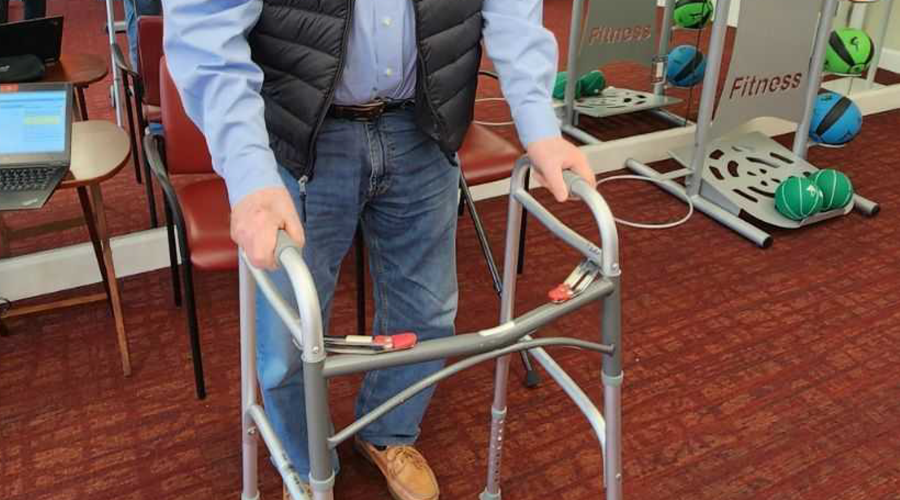
- Try different methods. Some individuals may find it easier to pull to stand using grab bars. Others may do better with one hand on the chair and one on a walker.
- Consider whether pain is a limiting factor. Look for nonverbal signs and check with caregivers. Pain can significantly reduce willingness to move.
- Give extra processing time—60 to 90 seconds. Offer encouragement such as “You’re doing great!”
Helping a person with dementia to stand can be daunting, and it’s essential to consider factors such as fatigue, pain, environment, fear, and motivation. It’s equally important to establish rapport, secure appropriate equipment (walker, noodle, grab bar), and use a variety of cues—verbal, visual, tactile, and physical. Keep verbal cues short and simple.
If you get stuck, reapproach the person to minimize frustration. Use the 90‑second rule to give them time to process and respond. Assess the environment to ensure they can focus on you without distractions.
Every person with dementia is different, so it may take time to figure out what works best. And never underestimate the value of a therapy referral if difficulty with transfers continues.