
The Importance of Establishing a Connection With Older Patients
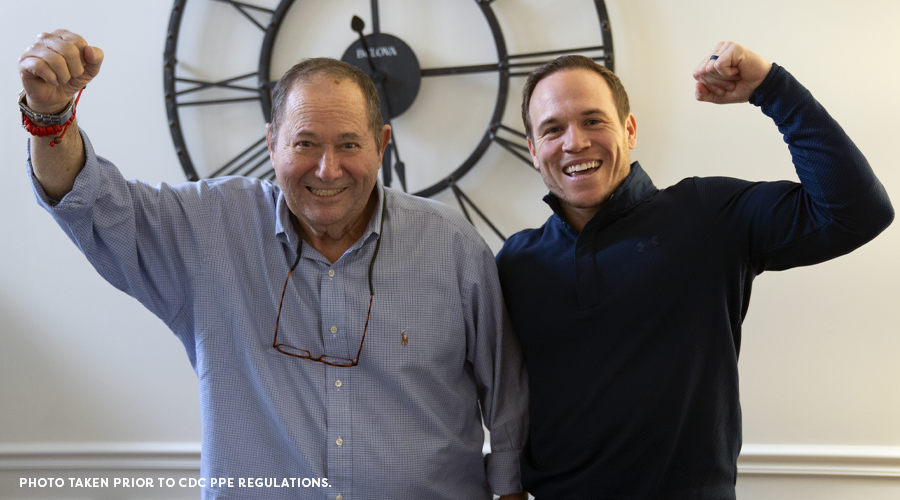
By Dale Ambrogio, PT, DPT
Physical Therapist
New clinicians come out of school with a plethora of information. They can name origins and insertions of muscles. They know medical conditions and medications. They can analyze movements, identify “normal” and “abnormal” and know ten different ways to treat any condition. What the new clinician doesn’t always learn is how to effectively talk to patients, and establish a connection with them. This is especially challenging with older adults as they may not be as forthcoming for a variety of reasons.
Are Your Patients Really Hearing You?
The first thing to do is to make sure that your patient can truly hear you. Hearing loss is common in older adults. The patient may or may not have hearing aids. And of the patients that have hearing aids, they may or may not work. If the older adult can’t hear you, they may be afraid to admit it. Or they may be afraid to answer because they are unsure they heard your question or comment correctly. They don’t want to sound “stupid” or “foolish,” so they withdraw. It is OK to ask your patient if they can hear you or ask them what you can do to communicate effectively with them. Some of the things that patients have told me are to “just speak up”, “talk into my right ear”, or “write it down.”
Clinicians may feel uncomfortable asking their older patients about their hearing. We all know that not every older adult has hearing loss and not every older adult needs a hearing aid. You may feel rude asking if they can hear you and we certainly do not want to offend our patient. So here are some tricks. In my case, my mother had lost hearing in one of her ears when she was young and because of this, I tend to be a loud talker! So this is something I may share with my patient and say, “Am I talking too loud? I tend to be a loud talker and I don’t want to yell at you!” Another suggestion is to blame the mask! In this day and age of wearing masks, I also feel like I have to raise my voice at times. You may say “Can you hear me OK? This mask always makes me feel like my voice is muffled.” These are also great ice breakers. You have made a connection to the patient and gained valuable information without offending them.
Are You Really Hearing Your Patient?
Clinicians—especially new clinicians—have a lot of ideas and tend to be very excited to share and implement those ideas. But this can lead to clinicians talking “to” the patient, not talking “with” the patient. The older adult may need extra time to process information, especially new information. They may need repetition. You may spend several sessions reviewing the same information. This is not wasted time. It is an important part of the patient’s therapy. The clinician may need to identify the most important tasks that need to be accomplished each session. Look at quality, not quantity. Ensure understanding and carryover, and allow that patient enough time to verbalize understanding, concerns, or questions. Ask them questions to make sure they are fully understanding what you are doing and why.
What I have often seen from new clinicians is that the clinician will TELL the older adult what the problem is, what needs to be done, and what the goals are. They often do not ASK the patient what the patient thinks the problem is, or what their goals are. The patient’s goals may be very different than the therapist’s goals, and that needs to be addressed the first time we meet our patient. When I was a new graduate, I spent treatment after treatment teaching one of my older patients how to get into bed by sitting at the edge of the bed, lying onto her side, and rolling onto her back. This was the “correct” way to do it, right? That’s what we learned in school. After several months of teaching her this technique, she said to me, “I just can’t get the hang of this. I’ll get in the way I usually do.” She then proceeded to climb into bed on her hands and knees and position herself onto her back. She did this safely and independently. I wasted precious treatment time on a task that was not even appropriate for her!
Is Your Patient Telling You What You Need to Know?
The older adult may not fully disclose information to their therapist, either intentionally or unintentionally. They may not think that something is important, so they don’t mention it. For example, the patient may have stopped taking their medication. Perhaps they don’t like how it makes them feel or maybe they can’t afford it. But they don’t think it’s something they should tell the clinician, or they think “that’s my medication, it won’t affect my exercise.” But we, as clinicians, know how much medication can affect our patients.
Or they may not tell the therapist because they don’t want to. Maybe they think the therapist won’t understand. Or maybe they are only agreeing to therapy because “the doctor told me I need it” or “my family wants me to do it.” Many times, I have spent time talking to a patient who tells me that they have had “so many therapists. They all do the same things.” Or as a patient once said to me “that therapist is just a kid. They tried to make me do things differently. I’ve been getting into bed the same way for 60 years, and they want me to change now?” These patients clearly did not make a good connection with their previous therapists.
How Much Do You Know About Your Patient?
Don’t be afraid to ask questions. One of my favorite things to ask is what type of work the patient performed. I find their answer to be very telling about their personality. For example, one of my patients was a high-powered NYC lawyer who still went into the office weekly. When I instructed him in tasks, he wanted the facts—short, sweet, and to the point. Another patient was an artist/illustrator, who responded best to descriptions and pictures. Discover ways to find out as much as you can about your patient and communicate in a way that makes sense to them. This is also a great way to connect with them. Personally, I am a terrible artist. My patients and I bond over how bad my stick figure home exercise people look (my stick figures are always smiling by the way!). With my patient who was an artist, I asked her to help me draw the pictures for her exercises. This was a great way to really solidify her understanding of the exercises and it yielded improved carryover.
Your patients most likely have family pictures around their homes. Ask them about their families when taking rest breaks. There have been many times that I have been able to detect some potential cognitive changes in a seemingly cognitively intact patient. Perhaps they aren’t able to identify family members, or they cannot identify famous landmarks in pictures. In one instance, one of my patients was unable to identify himself in a picture. This is now a great opportunity to start that conversation with the patient, family, doctor, therapy team to generate the appropriate referral.
Asking questions also shows interest, and when you hear what they say, don’t judge. An example is a patient who hasn’t been feeling well. Perhaps they feel their heart racing, or they are getting dizzy. But they aren’t telling their family because they don’t want them to worry. Don’t judge them, don’t tell them what to do. You want them to trust you. This is the perfect opportunity to build that connection. Explain your concerns. Offer to call the doctor. Ask if they want you to call their family member. Respect their decisions, but use that connection to do what’s best for that patient.
And, most importantly, don’t be condescending. Remember, these people have led active, productive lives. They have worked, raised families, made important decisions in their lives, and that is something to respect. Have empathy that these people have been independent their whole lives, and now they need help. That can be a humbling experience. Our job is to improve their quality of life, not “tell” them what to do.
Do Your Patients Know You?
Don’t be afraid to share aspects of your life if you are comfortable doing so. Even if it seems like something small. Recently I was treating a patient and during one of our rest breaks, I told him that I thought my dishwasher was not working. He told me what to look for and how to fix it. He was very happy to share his knowledge with me and help me with my problem. I too was very happy to learn how to fix my dishwasher! These little conversations help to build that connection with your patient. Remember the older adult may have valuable information that may help you in your own life. We all want to feel useful and appreciated, and it is no different for older adults. They have a wealth of knowledge that is ours for the taking.
Effective treatment goes beyond identifying weaknesses and creating our treatment plan. Clinicians need to establish a treatment plan that is meaningful to the patient. For the older adult, it may not be what you expect. Maybe your patient’s goal is to perform stairs because even though his family set up a bedroom on the first floor of his home he wants to go upstairs to the bedroom he shares with his wife. Or your patient wants to be able to build their endurance long enough to make it through bingo. We all get hung up on doing everything we need to do each session, doing all of our testing, and getting out with enough time to see our next patient. But we all need to realize that we aren’t treating “patients,” but we are helping people live their best lives.