
What to Expect When You Are—or Aren’t—Expecting Occupational Therapy
By Caitlyn Rose, MOT, OTR/L
Occupational Therapist
As a student, newly graduated professional, seasoned occupational therapist, patient, or caregiver we all have, or will have, that moment when occupational therapy is unexpectedly tacked onto a physician script. What now? Sometimes this is a pleasant surprise for a family, other times the referral is surprising—bringing up emotions such as confusion, anger, or fear.
How can you, the occupational therapist, get your foot in the door and get consent for something unexpected? Even if the family is aware of the occupational therapy referral, has the patient had occupational therapy before? If not, how do you explain your role?
I find the most successful cases are those where the outcome meets or exceeds expectations. How can we expect a patient or caregiver to get on board without any background understanding or clear expectations? I like to put the ball back into the court of the patient or their support system and facilitate understanding that occupational therapy is a collaboration between the patient, the support system, and the clinician. I try to impart that while I may have the clinical expertise, therapy is about the patient. I am the vehicle to drive them to their goals. They are the only ones who can be the expert on themselves, their body, and their wishes or expectations.
Occupational therapy can become a realistic sounding board and mediator between a patient and their family. At times there may be a discrepancy between what the patient feels can be achieved and what the caregiver expects from the patient’s recovery. Sometimes I can provide insight as to why the patient can participate in a certain task or can participate with certain modifiers—or why no, the caregiver is right on this one—that activity may not be feasible just yet. I can provide some understanding into the cognitive function, sensory feedback, biomechanics, adaptive equipment, how the caregiver can facilitate certain tasks for safety and completion, what outcome may be realistic, and what will be realistically expected of the patient and caregiver to get to the patient’s goals.
The Elevator Pitch—What Do Occupational Therapists Actually Do?
I tell my potential patient, and/or caregiver, that I am here to make their lives easier, safer, and better. But what does that look like in practice? From the moment you wake up until the time you go to sleep, each day is filled with activities that occupy your time. I can help you use your time most effectively.
The Occupational Therapy Practice Framework
If you are an occupational therapist struggling to explain to patients and caregivers exactly what your role is, consider brushing up on your knowledge of the OTPF.
OTPF: Occupational Therapy Practice Framework is a great resource. In fact, this is the “document of documents” to support your mission each time you interact with a patient. This is the glue that binds all occupational therapists together, our universal language.
You will notice this document can be used to support all of your treatment documentation, including your evaluations, progress reports, re-certifications, and discharges. Not just for insurance and reimbursement purposes, but to support the occupational therapy profession as a whole. This document supports what occupational therapy does, how occupational therapy contributes to the rehabilitation team, and most importantly, how occupational therapy can benefit your patients—in this case, the older adult population.
How Does Occupational Therapy Contribute to the Rehabilitation Team?
Or, “why do I need you if I already have a physical therapist or speech-language pathologist?”
Occupational therapists are trained to customize a treatment approach to the individual patient. We are trained to analyze the patient’s participation in functional and meaningful activities and implement interventions to support patient-specific goals. Our job is to get our patients to engage in activities and social participation.
Occupational therapists are unique in that we consider how the person interacts with the surrounding environment; everything from the physical objects within the person’s reach, to the patient’s social circles, to even the current political climate. We take into account the patient’s cultural background and personal preferences. We also consider the patient’s cognitive and sensory abilities, or how a person thinks and feels with their brain and body.
Here at FOX, we have a great and unique opportunity to work with our patients right in the patient’s home environment. Sure, therapy in a clinic has its own set of perks: larger and fancier equipment, more interaction with other clinicians and patients, and there is something to be said for such benefits, but for those of your patients who are alone, at increased fall risk, does not have dependable transportation, is too afraid to leave their home, or leaving is just too physically demanding, we can bring the therapy to you. Whether Fox is chosen instead of a clinic or inpatient rehab facility, or in preparation to get back to a clinic, or into acute inpatient rehab, we can help you achieve those goals, too. Why keep yourself from being able to benefit from therapy at all? And risk continued decline in function?
Also, especially as an occupational therapist who works so intimately with the patient and the patient’s environment, there’s no place like home. There is no need to pretend or simulate a bathtub transfer, car transfer, bed transfer, being able to collect the mail from the front stoop, gather your clothes, step out of your home and onto your back porch, or get back into the kitchen. Nothing beats the real thing!
What Can Occupational Therapists Do For the Patient?
If a patient referred to you recently experienced an injury, is trying to manage one or more chronic diseases, or has experienced a significant life change, occupational therapy can facilitate their needs and wishes through preventing, maintaining, restoring, establishing, modifying, or adapting the potential patient’s activities.
At times patients are looking to improve or enhance their quality of life, wellbeing, and sense of meaning or purpose. Occupational therapy can help the patient cope with daily living and guide your patient towards ways to advocate for the patient’s needs and self-express through craft or creation.
One occupation that is typically and sorely overlooked is leisure or play. Hobbies and interests still play a critical role during the later stages of life! If your patient has not played games or participated in a hobby in many years, or never was interested before, it is not too late.
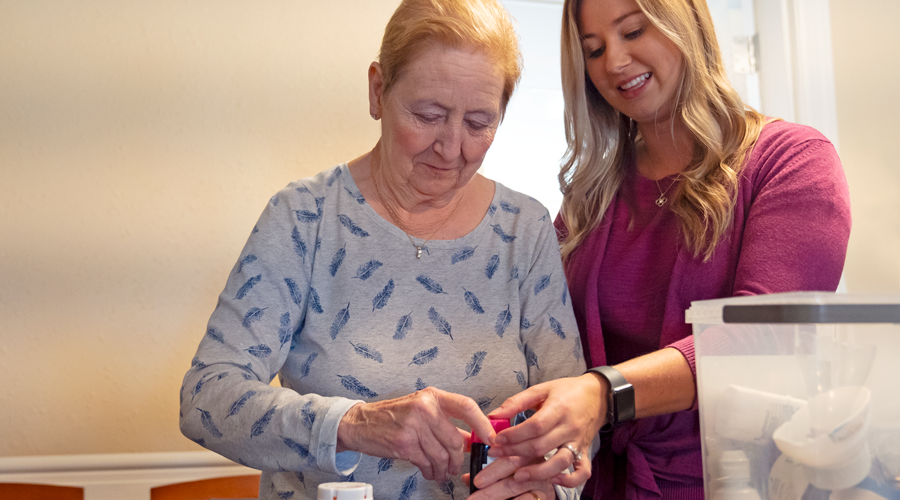
Sometimes treatment sessions include education or training in adaptive equipment or environmental modification to facilitate patient participation or setting up habits or routines to support patient goals in managing pain, vitals, medication, and disease.
Occupational therapy is a unique discipline and an integral part of the rehabilitation team that can drive patient outcomes and satisfaction. The next time a new referral comes through, I hope you feel confident in educating patients and caregivers about the role occupational therapy can play in the patient’s recovery, regardless of what other services may be in play.