
You Entered a Doctoring Profession. Begin Doctoring Fearlessly!
By Todd Bzdewka, PT, MPT, CCCE
Physical Therapist
Today’s Doctor of Physical Therapy students are, in my opinion, the best-prepared entry-level practitioners the profession has ever graduated.
They graduate with entry-level knowledge in all aspects of PT along with knowledge of medical issues including radiology, pharmacology, wellness, and an extensive knowledge of differential diagnosis.
Students learn from many different approaches including current research and well-proven techniques that have been used for decades.
They are fully prepared with the skills to solve any problem and reference the current body of literature as needed. These new graduates are considered entry-level and should recognize the need for continued education and the theory of lifelong learning.
Today’s graduates understand their scope of practice and unique role in an evolving healthcare system. PTs may be the future of cost-effective primary care in the United States. They are able to refer to needed healthcare professionals when red flags are present or a presentation is outside their scope of practice.
This is good healthcare.
PT new graduates should feel confident in their preparation and should be ready to tackle any patient type and practice environment.
Please don’t misinterpret. There is no substitute for experience.
However, experience alone does not make one adept at practicing autonomously. Proper education with formal mentoring is the recipe for true autonomous practice.
Unfortunately, influences from inside and outside the profession continue to plant a seed of doubt. This seed is in the back of new graduates’ minds telling them:
“You aren’t ready to practice autonomously.”
“You aren’t a real doctor.”
“You don’t have enough experience.”
A lack of formal new graduate mentoring, in general, makes this seed grow as new graduates enter the workforce.
However, organizations that have well-defined and formal mentor programs are the exception
The FOX Rehabilitation Emerging Professionals Mentor Program is such a program.
It is a formal six-month mentor program with clearly-defined expectations. There’s a dedicated mentor with reduced productivity. There’s also a gradual ramp-up of productivity. Evidence-based and continuing education requirements are also featured.
I will say, I have seen a change. Those internal to our profession who were once planting the seeds of doubt are now advising new graduates go into a home-based setting as long and there’s a mentor program.
In addition, the healthcare system is progressing with greater recognition of the unique skill and value clinicians acting as primary care practitioners bring.
It also needs to be added, that a mentor program alone is not enough, though.
There needs to be the opportunity for and resources to cultivate this idea of lifelong learning. This can include the opportunity of unlimited continuing education through a program such as Medbridge, something FOX offers. We’ve also created the ability to receive additional money to take courses outside of this platform through our Professional, Academic, and Clinical Excellence program which is our version of a clinical ladder program.
With support, any new graduate can become an extraordinary clinician based on patient-centered, evidence-based care – no matter the setting. I base this confidence on statistics going back over 12 years.
New graduates have been extremely successful with FOX – an unconventional setting. In fact, FOX has hired more than 400 new graduates, of which 85 percent are still happy, well-trained clinicians.
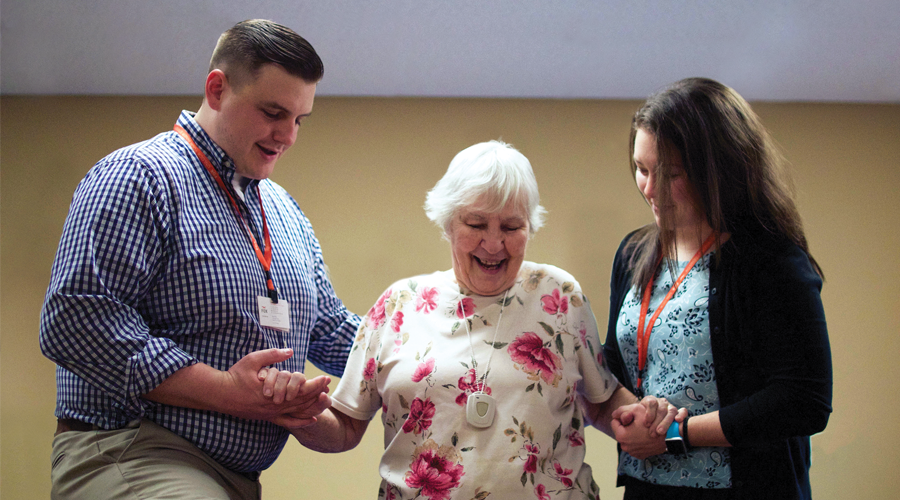
The FOX patient and clinician featured in this image are not referenced in this article.