
How We Can Use Proactive SLP To Achieve Better Outcomes
By Jonross Neptune, MS, CCC-SLP
Director of SLP Clinical Services
I was set to save the world as a speech-language pathologist.
I was going to change the lives of my patients and set them free from their struggles.
I was going to blow the minds of their family members and earn their love and admiration for eternity.
That notion was quickly squashed as I transitioned from a graduate student to a practicing geriatric SLP.
Early on in my career, the focus was on medical wellness. I was under the impression that as long as the patients were “stable” then no further interventions were warranted. This way of thinking was fundamentally wrong to me.
As I grew as a clinician, I reshuffled my thinking and began to ask myself, “why?”
Why can’t this patient learn to use compensatory strategies to follow a community activity schedule and rely less on the care staff?
Why can’t this patient learn to follow swallowing strategies that would promote safer eating and drinking all the while helping them enjoy the foods they love?
I trudged forward accepting every opportunity I could find to educate and promote the great things that could be accomplished with a proactive approach towards early identification and subsequent treatment directed towards functional decline.
Along my journey, I have witnessed first-hand the power of proactive treatment and the incredible impacts it has on the functional wellness of the geriatric patient.
In my daily practice, I am presented with many opportunities to help affect change on the geriatric population through community presentations, in-services, and attendance at support groups which can all help play a role in the early identification of functional decline.
It is through these encounters that I am able to proactively practice my profession as well as understand the true benefits to functional wellness you can have with this approach.
During one of these activities, I met a gentleman who had recently removed himself from participating as a chanter within his place of worship due to decline in his overall vocal function secondary to symptoms of Parkinson’s disease. In addition to his inability to participate as a chanter, he was also unable to fully express his wants and needs to his friends, family, and medical professionals due to the changes to his overall vocal functioning.
He had chalked this up to “getting older” and believed there was not much that could be done.
On the outside, he was “medically well,” but on the inside, a piece of whom he was for so long had vanished and taken with it: his functional wellness. He was not participating in life like he once did, thus propelling him closer to frailty.
By taking a proactive, patient-centered approach and identifying goals that were attainable and important to the patient, we were able to work towards functional wellness.
He improved his vocal functioning through participation in many dynamic voicing exercises as well as through the implementation of a patient-led home exercise program meant to help slow further decline with voice functioning.
As a result, he regained his voicing abilities and thus rejoined his fellow chanters at his local place of worship.
I have learned the power in proactive treatment practices that lead patients in the direction of better functional health through many firsthand accounts such as this one. Whether through the implementation of swallowing strategies for improved safety at meals, voicing techniques that will ultimately help them communicate their thoughts to others, or strategies for improved recall of cherished family memories, I know that early identification plays an integral role in the overall functional health of the patients we serve.
These may not seem mind-blowing to some, but to the patients and their families, it means more than I can put into words.
More time at home.
More time outdoors.
More time doing the things they love with the people they love.
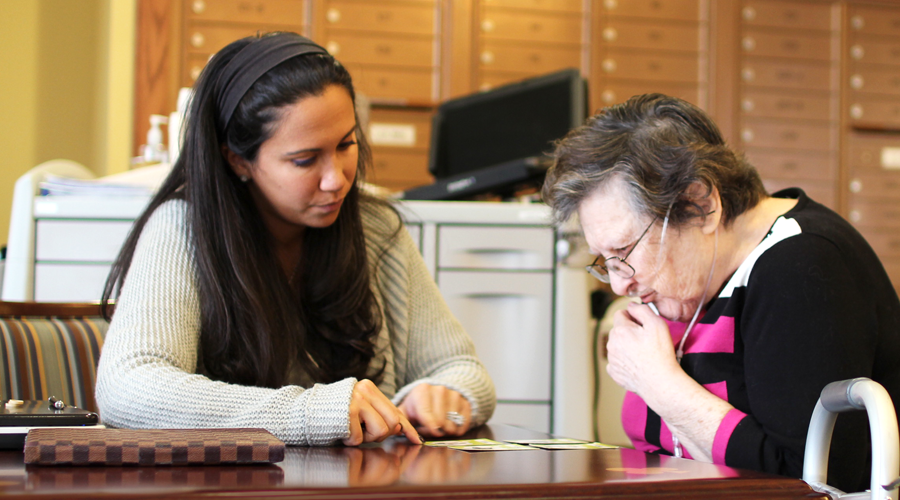
The FOX patient and clinician featured in this image are not referenced in this article.