
Volunteering: A Hidden Component to Living Better Longer
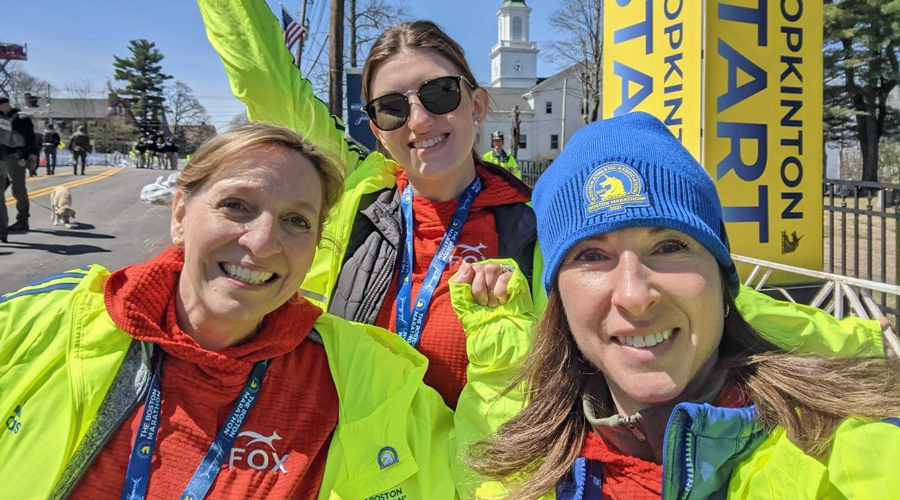
By Courtney Eldridge, PT, DPT
Physical Therapist
“Remember that the happiest people are not those getting more, but those giving more.” ― H. Jackson Brown Jr.
As clinicians, I think we can all agree we went into our respective jobs to help others. It is what gives us our purpose in life. As a physical therapist, I love being able to help others do what they once thought impossible or insurmountable. And while I love working with our population here at FOX, twice a year I spend a weekend at Camp No Limits, a camp for children with limb loss or difference and their families.
Volunteering is good for our professional and personal development, improves our mental and physical health, and provides a service to our local communities! Altruism is one of our core values as physical therapists for good reason; it is what makes us successful as therapists but also adds value to our own lives.
Benefits of Volunteering
FOX’s mission is to “live better longer” and this is a great way to help accomplish that goal for not just our patients, but ourselves!
In 2012, the journal Health Psychology published an article about older adults from the Wisconsin Longitudinal Study. It found that individuals who volunteered frequently and regularly were at a lower risk for mortality 4 years later compared to their peers who did not. An interesting caveat of this study was the correlation only occurred in the adults who volunteered with motives other than self-interest.
In addition, a 2020 Health and Retirement Study examined 12,998 participants and found those who volunteered around 100 hours a year had “reduced risk of mortality and physical functioning limitations, higher physical activity, and better psychosocial outcomes” compared to those who did not volunteer at all.
In yet another study, volunteering was found to decrease risk factors of cardiovascular disease specifically, hypertension and lipid dysregulation compared to non-volunteer peers in a study from 2004 to 2006 on 7,803 middle-aged to older adults.
Volunteering can introduce you to new friends and expand your community. There is even evidence to support that volunteering your time can help you feel more socially connected and decrease feelings of loneliness and depression. Even volunteering outside of our scope of practice helps connect us with those who are passionate about helping! If you are new to an area or looking to make friendships, volunteering is a great way to meet others.
How Volunteering Helped Me Become a Better Clinician
From my own experience with Camp No Limits, I have made friendships with people all over the country. Moreover, I even met my husband volunteering at camp! I have joined a community that is welcoming and motivates me to be better: a more compassionate friend, a more patient mother, and a more enthusiastic therapist.
Camp has helped me develop inter-professional relationships by working with occupational therapists, physical therapists, prosthetists, physical therapy assistants, and nurses. Each camp has taught me a new exercise, an exercise modification, or new gait training techniques, which has strengthened my ability to treat patients. It’s like going to a continuing education class with real patients and you can talk through real problems!
And the best part about working with kids is the focus on fun! I think it can be easy to get into a rut working with the adult population because they can “buy in” to our treatments. But we are all kids at heart and making exercise fun can increase participation and improve patient outcomes. The opportunity to be a professional volunteer has renewed my appetite for education and a sense of purpose in my work. It has also increased my confidence as a clinician. Being able to apply my knowledge as a physical therapist in different ways forced me to improve my critical thinking and in turn, reflect on areas of weakness to improve.
On a personal note, I feel that our healthcare system can be frustrating. I’ve had patients give me brand new bedside commodes that they don’t need and have never used but because of liability issues, I cannot pass it along to the next patient who needs it. We’ve all met patients who need services, but their insurance doesn’t accept FOX, or the co-pay is too high on their fixed income. One of my favorite parts of volunteering is the freedom to be able to see what someone needs and provide the appropriate care! Caring for others without having to document every detail is just the icing on the cake!
Clinicians Should Strive to Live Better Longer, Too!
Maybe there is no such thing as a completely selfless act. We entered this field to help others and make a difference because helping people makes us feel good. Looking for that positive feeling takes away from some of the altruism of the act, but I don’t think it completely negates it. Volunteering is good for us and for those around us! It connects us, strengthens our social interactions, improves our health, and has been found to help us live longer. I hope this article motivates you to volunteer and live better longer!