
Explaining “Excess Disability” & Tips for Clinicians on Caregiver Education
By Katherine Ambrose, PT, DPT
Physical Therapist, Maryland 3
As a clinician, I often hear caregivers say “I didn’t know they could do that!” following a therapy session. People are often surprised by their family member’s capabilities. Many times, caregivers have been performing a task or activity for a patient for so long that they didn’t know their family member was capable of doing it on their own.
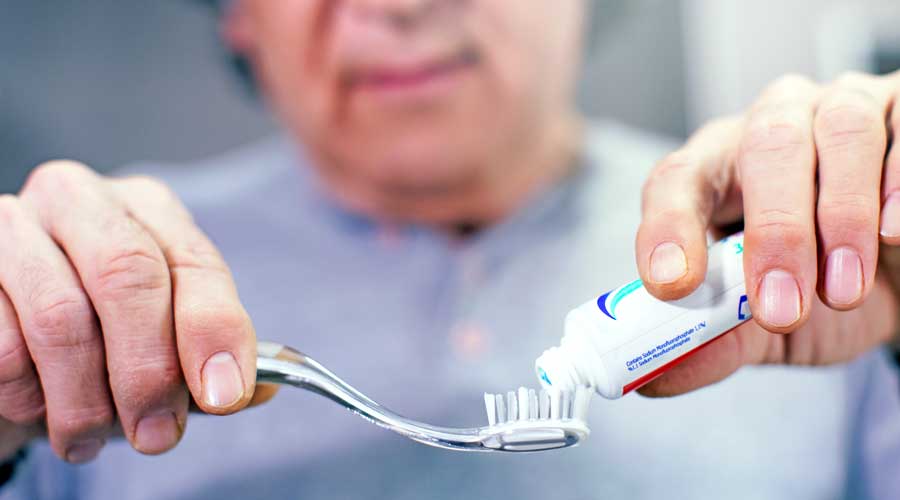
Caregivers and clinicians alike can complete a task such as putting on a pair of shoes, applying toothpaste on a toothbrush, or wheeling someone in a wheelchair across a room. We do these tasks quickly and move on with our day. But by doing so, little by little, patients may lose the ability to perform these tasks at all, simply because they don’t do them.
The “Use It or Lose It” Principle of Therapy
My grandmother, suffering from the side effects of chemotherapy and radiation, asked me to help fill her pillboxes. I did, placing all the pills in the boxes. She quickly stopped and told me that she only needed help with the smallest pills, because she was able to pick up the others herself. Picking up pills kept her fingers strong, mobile, and capable of doing 90% of the task.
I viewed my grandmother as having an “excess disability.” Excess disability means viewing someone as more debilitated and requiring more assistance than they actually need. It’s also referred to as “learned helplessness.” So how do we educate caregivers on excess disability?
3 Tips to Help Caregivers Avoid an Excess Disability Mindset
- “Let Me See You Try It”
We don’t know what someone is capable of achieving if we don’t see them try. Patients will often tell me, “I haven’t done that in 6 months.” But if we don’t try, we aren’t able to see the areas that require improvement. Even if patients aren’t able to do it, we can still identify the areas of limitation and implement the right interventions in treatment sessions to carry over to a home exercise plan (HEP). - Start Small
“If I let them do everything, it would take all day.” It doesn’t have to be all at once! Remind caregivers to create achievable goals such as walking to the kitchen table. Then progress daily or weekly, adding in a few steps each day until your family member is able to walk across the house. - “Tell Me When You Need Help”
Our gut reaction is to help people as soon as we see them struggling. As helpful as we want to be, we should wait until someone needs help. This can be difficult if someone is struggling or performing a task slowly. It’s possible that with a little more time, someone will be able to get out of a chair. We should be patient with people as they learn what their bodies are capable of.
As clinicians, we often hear caregivers share sentiments like, “They do it for you, but not for me.” How can we bridge the gap between what a patient is willing to do for us, and what they refuse to do for their caregivers?
The truth is often that patients tend to listen to us more than their family members. It is important to relate interventions and activities back to patient goals. Instead of, “Do your exercises”, we should be educating caregivers to say, “If you do your exercises, you’ll get stronger to get back to gardening.”
We must remind patients of their “why” to continue with self-motivation. We want our patients to get better for themselves and to get back to the activities that improve their quality of life.
Mitigating Caregiver Burnout
In addition to the patient’s “why”, it is also important to educate caregivers on why they should be compliant with a HEP. It may seem easier for a caregiver to continue with their normal routine following therapy intervention. I see caregiver burnout daily. We can educate caregivers by explaining to them that the more a patient can do, the less they will need to do. We should educate caregivers on the risk of injury for both the patient and caregiver, body mechanics, and ways that a patient can be strengthened to complete part of the movement themselves. In this case, a patient gets stronger and a caregiver does a little less. It’s a win-win!
With improved caregiver education, we can decrease excess disability and ultimately decrease caregiver burden. It begins with open communication with caregivers from the first initial evaluation and creating a therapeutic alliance with families. Patients and caregivers will trust us and have better outcomes when they know that we care.